Need Help: Providing Innovative and Sustainable Solutions, Email sales@sgycranes.com
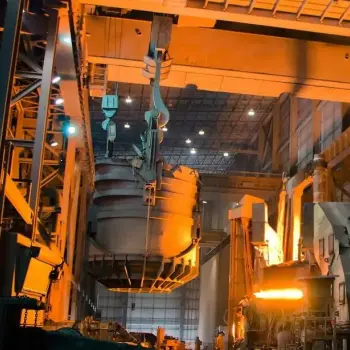
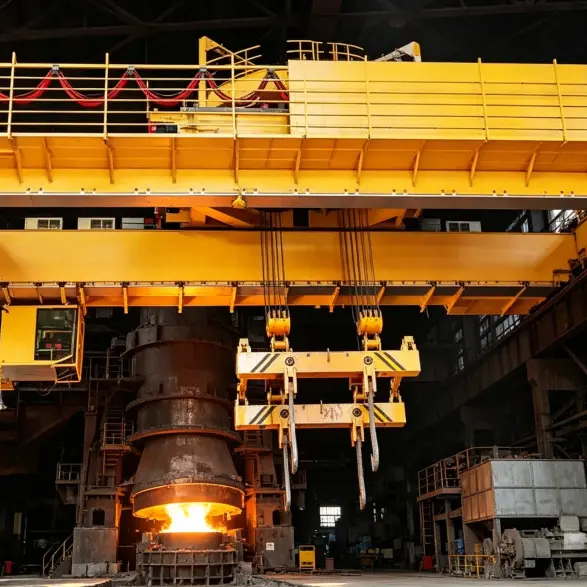
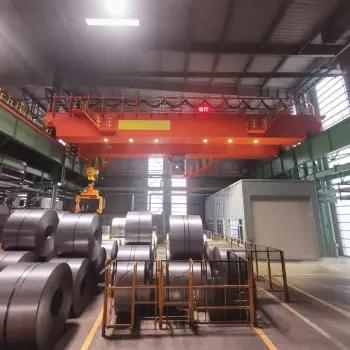
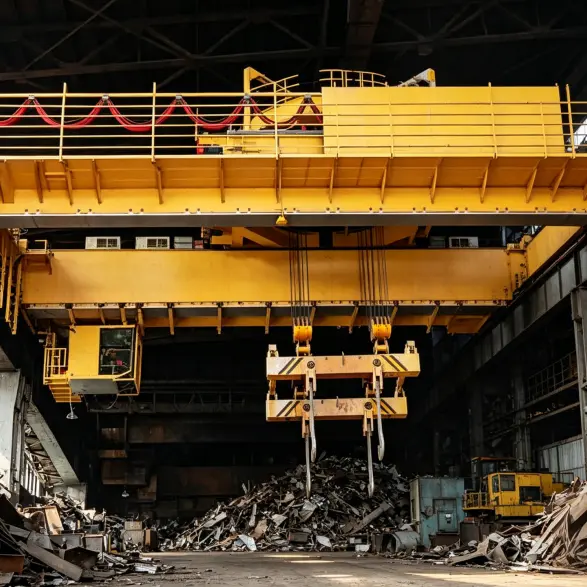
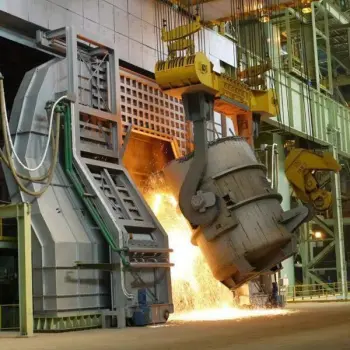


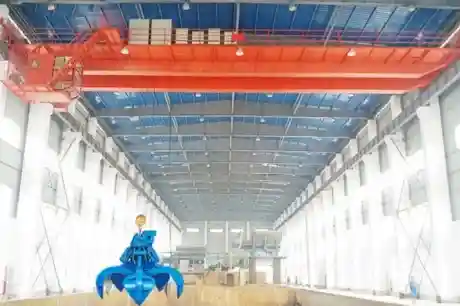
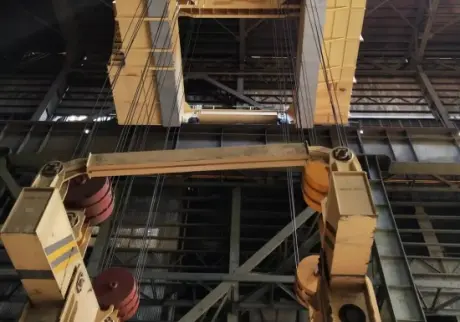
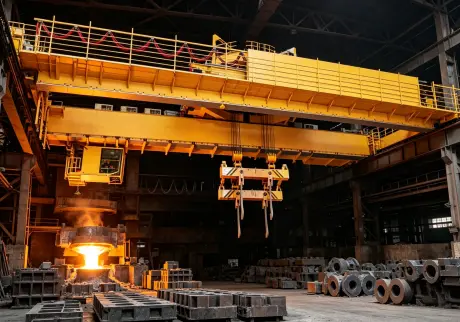
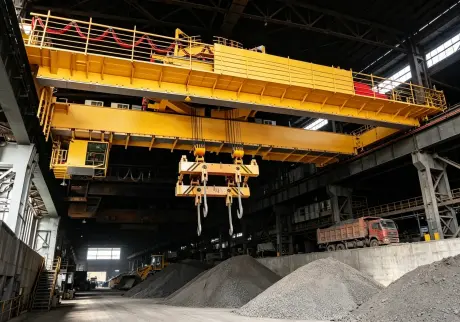
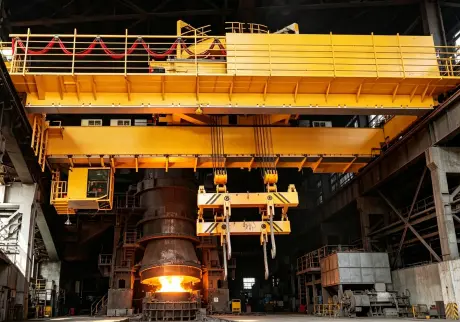
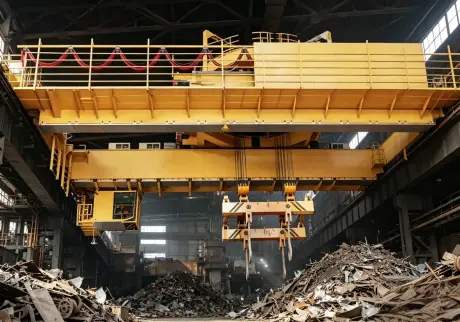
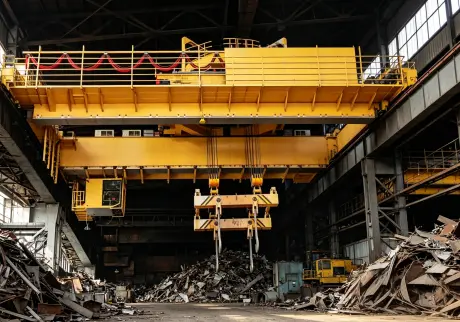
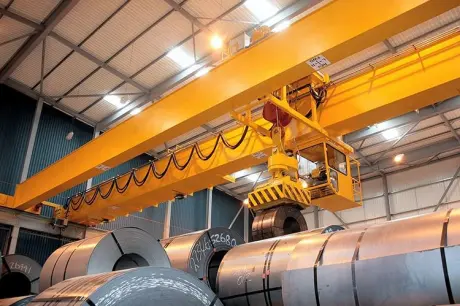
The Rotary Feeding Overhead Crane, also widely referred to in the steel industry as the Rotary Scrap Charging Crane or Converter Charging Crane, is a specialized heavy-duty metallurgical crane purpose-built for charging scrap steel and auxiliary materials into converters and electric arc furnaces in steelmaking plants. Unlike a standard double girder overhead crane whose trolley moves only in straight lines, this crane's defining feature is a 270-degree rotating trolley mechanism that enables the lifting unit to rotate, precisely adjusting the angle and orientation of the scrap charging trough.
| Parameter | Specification |
| Lifting Capacity | 5 – 320 t (customizable) |
| Lifting Height | 12 – 28.5 m (customizable) |
| Span | 10.5 – 31.5 m (customizable) |
| Work Duty Class | A7 – A8 |
| Lifting Attachment | Four-point twin gantry hook beam |
| Control Method | Cabin / Pendant / Wireless Remote |
| Thermal Protection | High fire-resistance and heat-resistance structural rating |
| Power Supply | customizable |


WhatsApp:
+86-17337353108

Email:
sales@sgycranes.com


Please Enter Your Name
Please Enter Your Phone
Your Phone is invalid
Please Enter Your Name
Please Enter Your Phone/WhatsApp
Your Phone/WhatsApp is invalid


 Read More