



50 TON ELECTRIC TOWING WINCH DELIVERED TO INDONESIA SHIPYARD FOR SAFER AND FASTER VESSEL LAUNCHING
Background
1.In recent years, Indonesia’s shipbuilding industry has experienced steady growth, driven by increasing demand for coastal cargo vessels, fishing boats, and offshore support ships. As shipyards expand production capacity, reliable vessel launching and hauling equipment has become critical to maintaining project schedules and ensuring safe operations.
2.Located in Surabaya, one of Indonesia’s most important maritime centers, PT. Nusantara Maritime Shipyard was facing exactly this challenge. The shipyard had relied on an aging hydraulic towing system for more than a decade. While the equipment had served its purpose, rising maintenance costs, environmental concerns, and operational inefficiencies were beginning to affect daily production.
3.To support future growth and improve operational reliability, the shipyard decided to replace its outdated hydraulic winch with a modern electric towing solution capable of handling demanding marine conditions.
The Challenge
1.The existing hydraulic towing winch had been in operation for approximately 12 years and was showing clear signs of wear.
2.One of the biggest concerns was hydraulic oil leakage. Frequent leaks not only increased maintenance expenses but also created environmental risks around the slipway area and nearby seawater. As local environmental regulations became stricter, the shipyard faced growing pressure to eliminate potential sources of contamination.
3.Operational control was another challenge.
4.When launching or retrieving vessels, operators needed precise control over pulling speed and line tension. However, the aging hydraulic system offered limited adjustment capabilities. Sudden tension spikes occasionally occurred during operation, creating unnecessary stress on the wire rope and increasing safety risks.
5.Maintenance had also become increasingly difficult. Several key hydraulic components were no longer readily available, resulting in extended downtime whenever repairs were required. In some cases, vessel delivery schedules had to be adjusted while waiting for replacement parts.
6.The installation environment added another layer of complexity. The new winch would operate on an exposed coastal slipway where equipment is constantly subjected to:
High humidity levels exceeding 90%
Salt-laden sea air
Heavy seasonal rainfall
Temperatures reaching 40°C and above
7.The customer needed a solution that could deliver reliable performance while withstanding years of corrosion and harsh weather conditions.
Project Requirements
1.After several technical discussions, the shipyard established a clear set of requirements for the new towing system.
2.The equipment needed to provide:
50-ton rated pulling capacity
Long-distance vessel towing capability
Smooth variable-speed control
Enhanced operational safety
Low maintenance requirements
Long-term corrosion resistance
Fast delivery to fit the shipyard’s production schedule
3.Meeting all these requirements within a tight project timeline would require a customized engineering approach.
The Solution
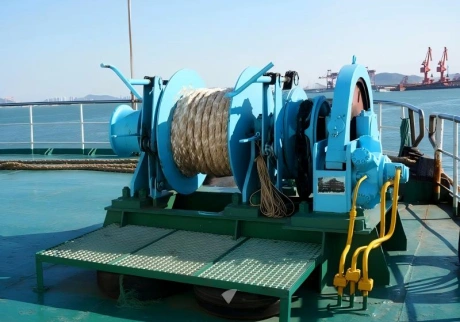
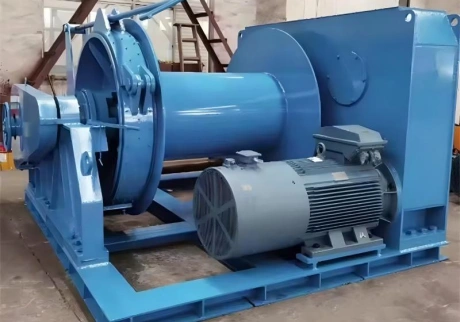
1.Following a detailed review of vessel sizes, slipway dimensions, operating frequency, and environmental conditions, Yuntian Crane proposed a customized Electric Towing Winch specifically designed for heavy-duty marine applications.
Main Technical Specifications
| Item | Specification |
|---|---|
| Rated Line Pull | 50 Tons (500 kN) |
| Wire Rope Diameter | 48 mm |
| Rope Capacity | 800 m |
| Effective Towing Distance | 750 m |
| Duty Class | M5 |
| Power Supply | 380V / 50Hz / 3 Phase |
| Control System | PLC + Wireless Remote Control |
| Delivery Time | 45 Days |
Rather than simply replacing the existing equipment, the project focused on improving safety, efficiency, and long-term reliability.
Variable Frequency Drive Control
1.The towing winch was equipped with a variable frequency drive (VFD) system, allowing operators to adjust pulling speed according to vessel position and operational requirements.
2.Compared with the previous hydraulic system, acceleration and deceleration became significantly smoother, reducing shock loads and improving overall control during vessel launching operations.
Dual Braking System
1.Safety was a major concern for the customer, particularly when handling vessels on inclined slipways.
2.To address this requirement, the winch was equipped with:
Electromagnetic fail-safe brake
Hydraulic thruster brake
3.This dual-brake configuration provides additional protection during emergency situations and helps prevent unintended vessel movement in the event of power loss.
PLC-Based Monitoring
1.The system includes a PLC control platform with real-time load monitoring.
2.Operators can monitor:
Pulling force
Operating speed
System status
Alarm notifications
3.from a centralized control station.
4.This significantly improves operational visibility and reduces the need for personnel to work close to moving equipment.
Marine Corrosion Protection
1.Because the winch would operate in a highly corrosive coastal environment, special attention was given to surface protection.
2.The structure received:
SA 2.5 abrasive blasting
Zinc-rich epoxy primer
Marine-grade epoxy intermediate coating
Polyurethane topcoat
3.Critical components were additionally protected using corrosion-resistant materials and marine-grade finishing techniques.
4.The final coating system was designed to meet C5-M marine environment requirements, ensuring long-term durability under severe salt-spray exposure.
Installation and Commissioning
1.The project progressed smoothly through manufacturing and factory testing.
2.However, during on-site installation in Surabaya, engineers encountered an unexpected challenge.
3.Local power supply fluctuations were significantly greater than anticipated, with voltage levels varying between 340V and 410V.
4.Such fluctuations could potentially affect the performance of sensitive electrical components.
5.To ensure stable operation, Yuntian's engineering team quickly implemented a solution by installing a voltage stabilization module and additional reactor protection within the control system.
6.The modification was completed before final commissioning and prevented potential operational issues without affecting the project schedule.
Load Testing
Before handover, the towing winch underwent a comprehensive testing program.
Static Load Test
125% rated load
62.5 Tons
Dynamic Load Test
100% rated load
50 Tons
Throughout the testing process:
Rope spooling remained uniform
Braking performance met design requirements
No overload alarms occurred
No abnormal vibration was observed
Electrical systems operated normally
The equipment successfully passed inspection and was approved for operational use.
Results After Commissioning
The new electric towing winch entered service in early 2026 and immediately became a critical part of the shipyard's vessel launching process.
Faster Vessel Movement Operations
1.Before the upgrade, vessel launching and retrieval preparation often required approximately six hours.
2.After commissioning the new winch system, average preparation time was reduced to around 2.5 hours.
3.This improvement significantly increased slipway utilization and allowed more efficient project scheduling.
Reduced Labor Requirements
1.Automation and remote-control functionality simplified daily operation.
2.The number of personnel required for standard towing operations decreased from five operators to one primary operator and a supporting supervisor.
Lower Maintenance Costs
1.By eliminating hydraulic pumps, oil systems, and related components, routine maintenance requirements were substantially reduced.
2.The shipyard also eliminated the environmental concerns associated with hydraulic oil leakage.
Reliable Long-Term Performance
1.Since entering operation, the winch has accumulated more than 800 operating hours.
2.During this period, the shipyard reported:
Zero major equipment failures
Zero hydraulic leakage incidents
Zero safety accidents
3.The equipment continues to support daily vessel launching operations reliably.
Why the Project Succeeded
1.This project demonstrates that selecting a towing winch is not simply about pulling capacity.
2.Several factors contributed to the successful outcome:
Matching equipment specifications to actual operating conditions
Designing for marine environmental challenges
Incorporating redundant safety systems
Providing local commissioning support
Responding quickly to unexpected site conditions
3.By focusing on the complete operational requirement rather than just the equipment itself, the shipyard was able to improve efficiency, reduce maintenance costs, and enhance operational safety.
Conclusion
1.For shipyards involved in vessel launching, ship repair, and marine construction, reliable towing equipment directly impacts productivity and project delivery schedules.
2.The successful installation of this 50 Ton Electric Towing Winch in Surabaya demonstrates how modern electric winch technology can replace aging hydraulic systems while delivering measurable improvements in safety, efficiency, and maintenance performance.
3.As shipbuilding operations continue to modernize, customized marine towing winches are becoming an increasingly important solution for shipyards seeking long-term operational reliability in demanding coastal environments.
HENAN YUNTIAN CRANE CO., LTD.
Learn more about our company on the About Us page.
Email: sales@sgycranes.com
Website: [https://yuntiancrane.com]
Whatsapp:+86-17337353108


