



HOW TO CHOOSE THE MARINE CARGO DECK CRANE THAT SUITS YOU BEST
Product introcution
1.definition
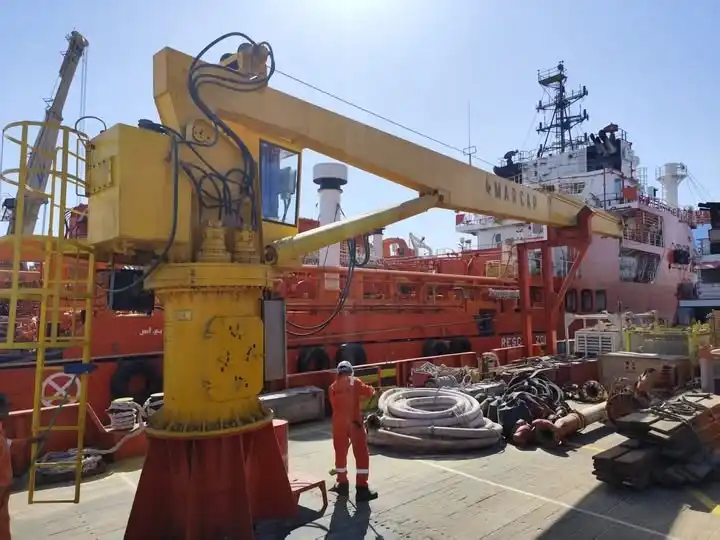
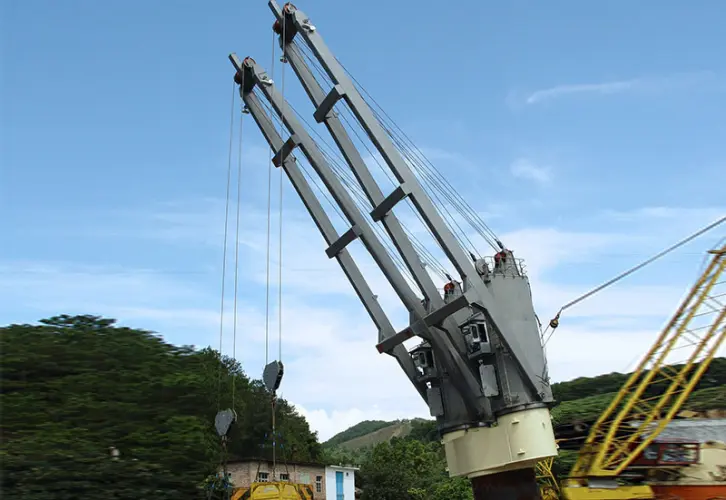
Typically referred to as a "cargo deck crane" or simply "crane," the cargo crane is a heavy-duty, marine-grade lifting device that is permanently mounted on the decks of vessels, barges, and offshore platforms. Built to withstand tough maritime conditions, it acts as the main tool for loading and unloading cargo, moving equipment, and carrying out offshore maintenance tasks.
2.merit and demerit
One of the biggest strengths of the cargo crane is its small footprint and compact design, which allows for flexible maneuvering and fast loading and unloading. Once a load is lifted, the operator can reposition the hook's landing point freely, and very little setup is needed before getting started. That's why it has become the go-to lifting equipment on most modern ships. On the flip side, the crane does come with some downsides — its structure is fairly complex, the upfront cost is high, and ongoing maintenance can be challenging.
3.the trait
A hydraulic cargo crane, in particular, combines electrical, hydraulic, and mechanical systems into one highly technical piece of shipboard equipment. Because of this, it requires staff with solid specialized knowledge to handle routine maintenance properly and keep everything running smoothly.
Standard Configuration
1.Structure:
High-strength steel construction (box-type boom, pedestal base) with corrosion-resistant coating for saltwater environments.
2.Drive System:
Fully hydraulic or electro-hydraulic system, offering smooth and precise control.
3.Control System:
Operator cabin with joystick controls, overload monitoring, and anti-sway technology for stable lifting.
4.360° Slewing:
Full-circle rotation capability for maximum deck coverage and operational flexibility.
5.Luffing System:
Hydraulic cylinders or winches for adjusting boom outreach.
6.Hoisting System:
High-performance winches with steel wire ropes, hook blocks, and safety latches.

Features & Advantages
Marine Cargo Deck Crane — Built for High-Performance Offshore Operations
Designed specifically for demanding marine environments, the Cargo Deck Crane delivers a powerful combination of strength, flexibility, and reliability — making it a strong choice for modern shipboard cargo handling.
1. Heavy-Lift Capability Up to 50t SWL
With a maximum safe working load of 50 tonnes, the Cargo Deck Crane handles even the heaviest offshore loads with confidence, covering a wide range of heavy-duty lifting scenarios.
2. Operator-Friendly Design with Reliable Braking
The crane's control layout is built around ease of use — operators can work efficiently without unnecessary complexity. Paired with a high-performance braking system, it delivers precise stops and secure holds, significantly reducing the risk of accidents during operation.
3. Built to Withstand Harsh Shock Loads
Offshore conditions mean constant vibration and impact. The Cargo Deck Crane is engineered to remain stable under these shock-heavy environments, ensuring continuous and safe performance where others might falter.
parameters and Drawing
Model |
Capacity(t) |
Outreach(m) |
Lifting speed (m/min) |
Slewing speed(r/min) |
SWL20 |
20 |
20 |
0-25 |
0-1 |
SWL 30 |
30 |
28 |
0-25 |
0-1 |
SWL 40 |
40 |
35 |
0-25 |
0-1 |
SWL50 |
50 |
38 |
0-25 |
0-1 |

Key Advantages
1.High Efficiency:
360° rotation and flexible boom movement significantly reduce cargo handling time compared to traditional derricks.
2.Compact Design:
Minimal deck footprint, leaving more space for cargo storage.
3.Durability:
Built with marine-grade materials and corrosion protection for long service life in saltwater conditions.
4.Versatility:
Supports multiple attachments (hooks, grabs, baskets) to handle different types of cargo.
5.Low Maintenance:
Modular components and reliable hydraulic systems reduce downtime and service costs.
6.Certification Compliance:
Designed and tested to meet international standards such as ABS, DNV, LR, and CCS for maritime safety.

How to Choose the Right Marine Cargo Deck Crane for Yourself
1.To meet different scenarios, the following accessories are available for the cargo crane.
a. Hook, & grab
b. Remonte control & cabin
c. Load cycle and machine data recorder
d. Dynamic anti collison
e. Emergency stop system
f. Hoist up/down limit switch
g. Overload alarm/cut-off
h. Cooling fan & air conditioner
i. Current overload protection
j. Slack rope protection system
k. Centralised greasing system
3) Working condition
a. Heel≤5 ° Trim ≤2°
b. Suitable for sea duty max wave height 1.5m
c. Suitable for marine operations in tropical conditions of high humidity levels
d. Design wind speed 30Knots
e. Surface current of 2 knots
f. Working temperature -20℃~+45℃
Note: We offer customization for variable working condition.
2.Match the Crane to Where It Will Actually Work
a.Bulk carriers with deep holds: The crane needs reach — usually 18 to 36 metres — to cover the hatch without repositioning the vessel, and enough hoisting height to reach the hold bottom cycle after cycle.
b.General cargo ships with tight deck space: Priority is 360-degree continuous slewing and a compact pedestal footprint. Every square metre the crane occupies is a square metre you can't load cargo onto.
c.Offshore supply or open-water work: The crane must handle deck movement — heave and trim — without the load swinging. Electro-hydraulic drive and precise VFD control are what stop a lift going wrong when the sea picks up.
3.Pin Down Two Numbers — What You Lift, and How Far Out
a.Load drops as radius grows: A crane that lifts 30 tonnes at 20 metres will not lift 30 tonnes at 36 metres. The capacity chart tapers outward. Check the full load-radius curve, not just the headline number.
b.How often you lift matters as much as how heavy: A crane handling 20-tonne coils twice a day can be built lighter than one cycling 50 times a shift with 5-tonne pallets. This is your work duty — typically A5 to A7 under ISO. Pick too low a duty class, and the crane wears out early. Pick too high, and you overspend on structure you don't need.
Discuss the relevant knowledge with us
If you are evaluating a new marine cargo deck crane and want to see how other vessel operators have configured their equipment, browse our "Case Studies" page for real project examples. Our "Service and Support" team handles installation, commissioning, and long-term maintenance for every crane we deliver. To discuss your specific vessel requirements, get in touch through the "Contact Us" page — we typically respond within one working day.
HENAN YUNTIAN CRANE CO., LTD.
Email:sales@sgycranes.com
Website: [https://yuntiancrane.com/]
Whatsapp:+86-17337353108


