1
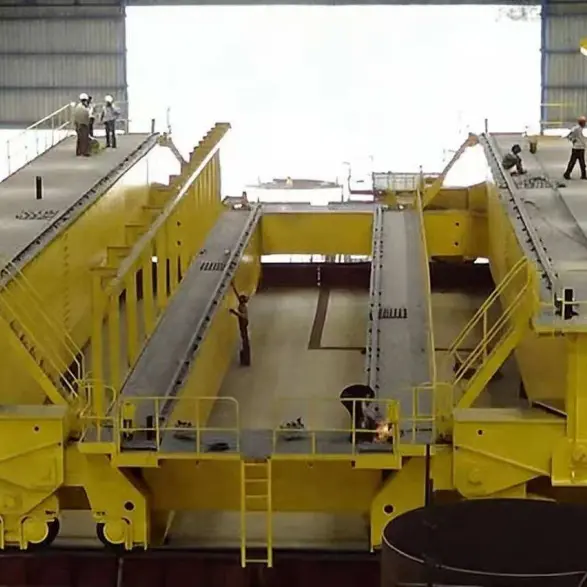
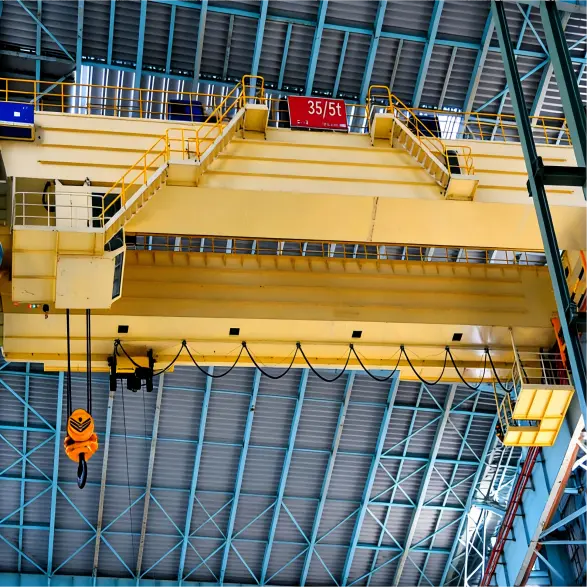
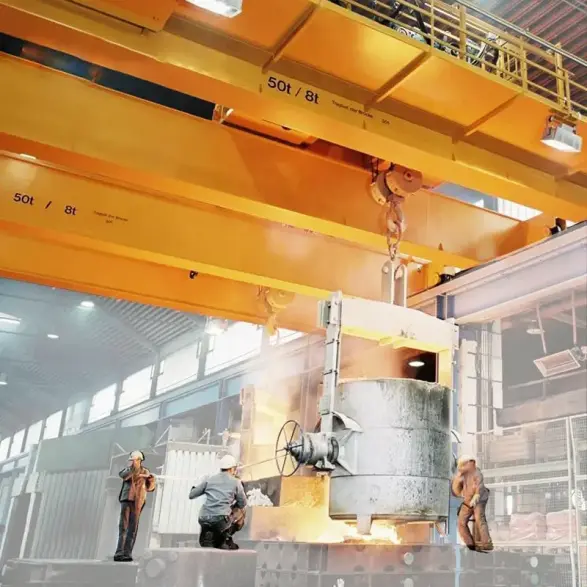
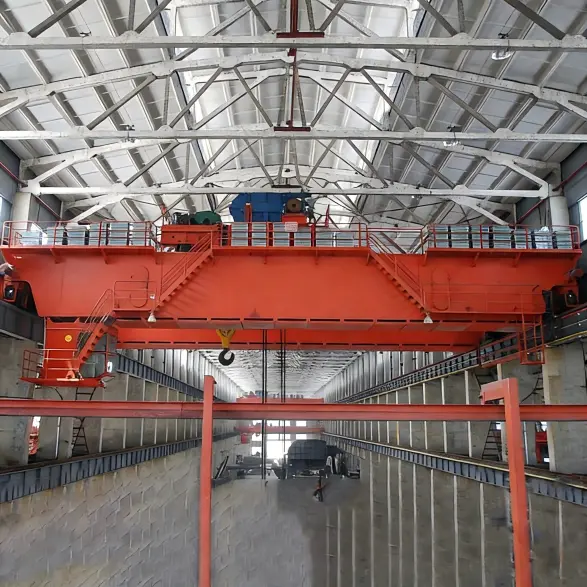
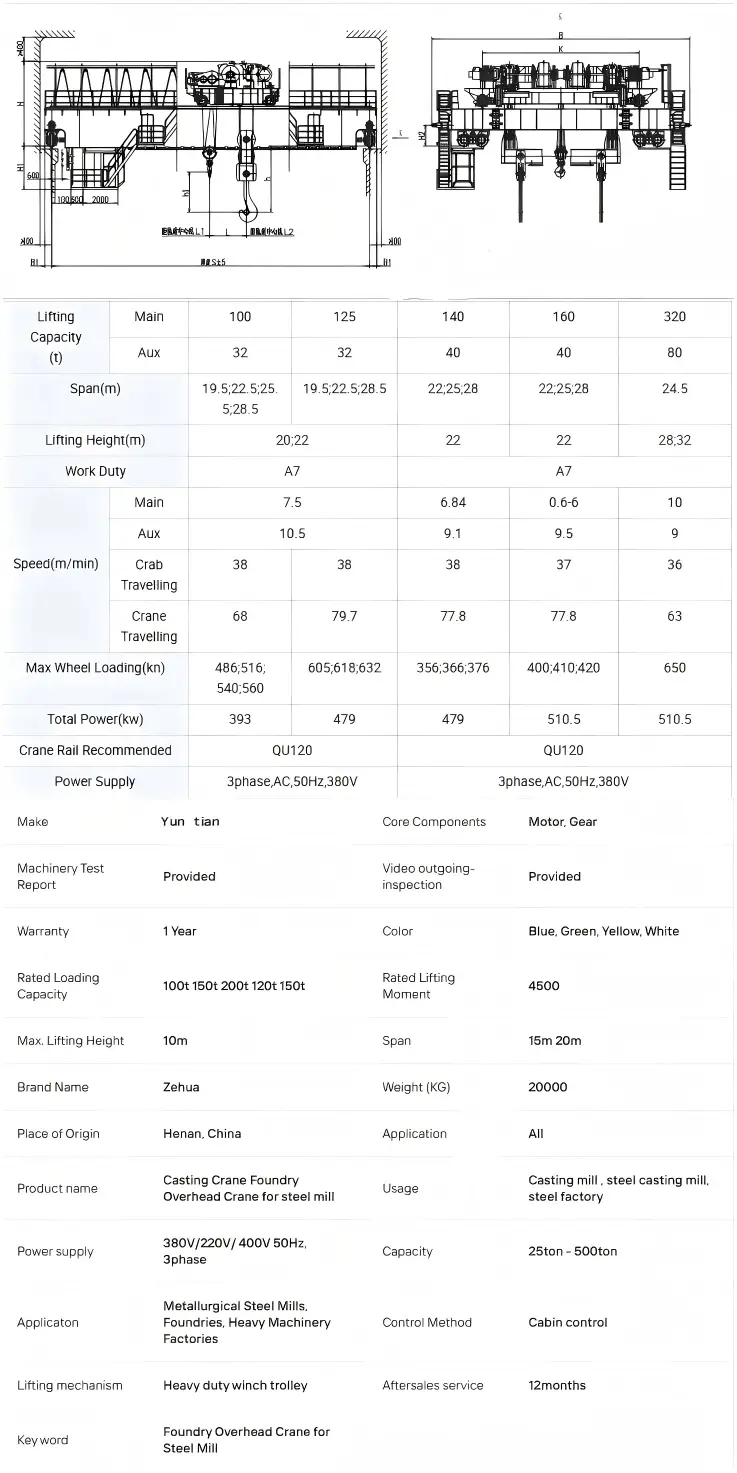
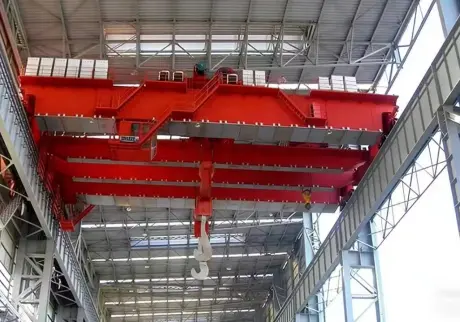
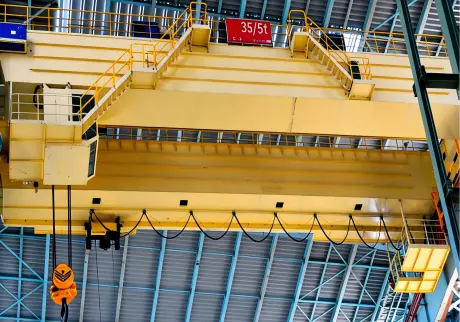
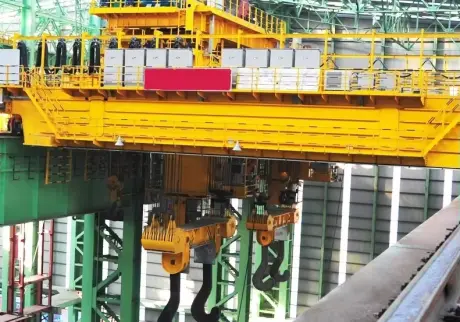
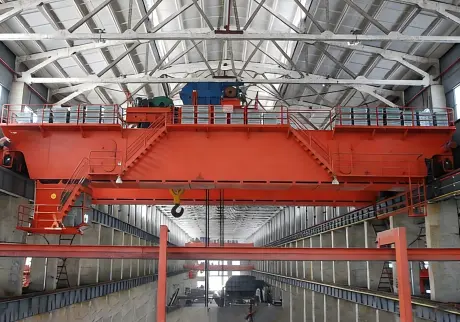
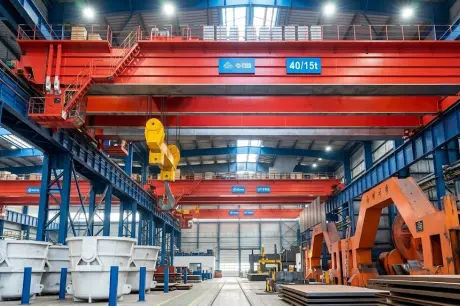
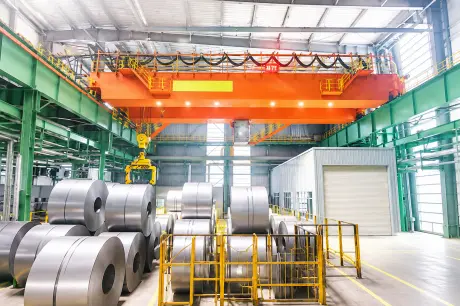
Four-girder four-rail dual-trolley configuration — The main and auxiliary trolleys run on independent rail sets, with the main trolley handling steel ladle lifting and pouring and the auxiliary trolley managing ladle tilting, slag operations, and auxiliary material handling. This structural arrangement distributes the load evenly across all four girders, providing exceptional stability under full-capacity hot metal loads.
2
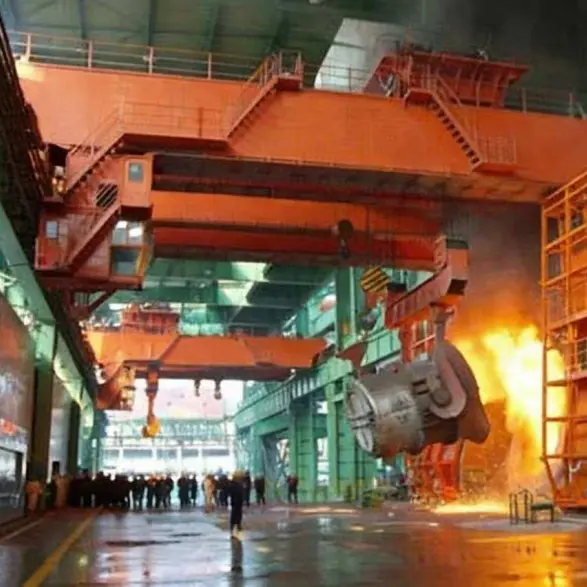
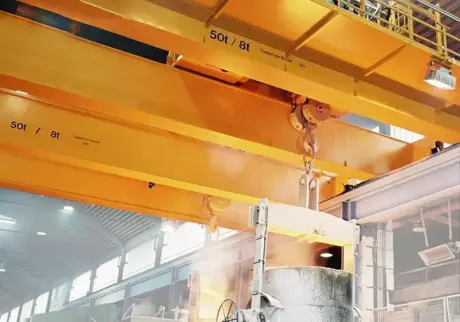
Safe and redundant molten metal handling — The primary function is transporting and pouring molten steel using ladle hooks and lifting beams. Every hoisting mechanism features dual-drive and dual-braking redundancy: if one drive or brake fails, the other can independently and safely lower the ladle to the ground. All hoist drums, wire ropes, and hook assemblies are rated for high-temperature service with metal-core high-temperature-resistant wire ropes.
3
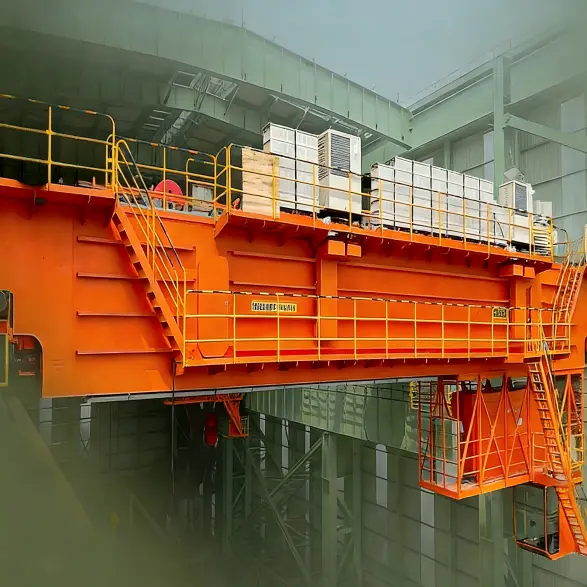
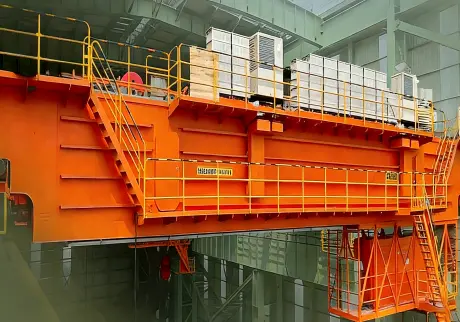
Thermal radiation protection — Heat shields and radiation protection panels are installed between the main girder and the trolley to absorb radiant heat from the molten metal ladle, ensuring electrical enclosures, VFD drives, and PLC control cabinets remain within safe operating temperatures during prolonged hot metal transfers.
4
PLC-based intelligent control with VFD drive — A programmable logic controller manages all crane motions with variable frequency drive technology delivering stepless speed regulation, shock-free acceleration and deceleration, and precise load positioning. The control system supports multiple operation modes with real-time load monitoring, diagnostic fault logging, and optional automated ladle handling cycles.
5
Comprehensive safety protection — Integrated safety systems include dual overload protection, upper and lower limit switches, emergency stop, phase sequence and voltage protection, anti-collision sensors, zero-position protection, and real-time diagnostics with fault alarm display — all monitored and logged by the PLC system-.