



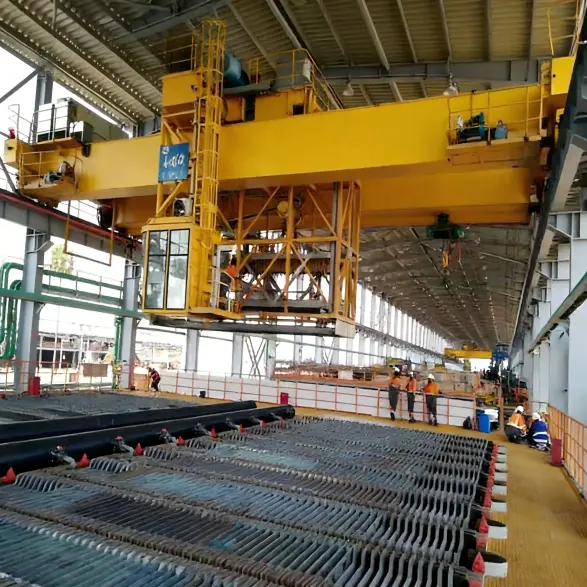
ELECTROLYTIC COPPER OVERHEAD CRANE FOR A COPPER REFINERY IN ANTOFAGASTA, CHILE
Project at a Glance
| Parameter | Detail |
|---|---|
| Location | Antofagasta, Chile |
| Industry | Copper Smelting & Electrolytic Refining |
| Product | Electrolytic Copper Overhead Crane |
| Capacity | 16 tonnes |
| Span | 28.5 metres |
| Lifting Height | 15 metres |
| Work Duty | A7 |
| Control System | PLC fully automatic |
| Delivered | 2023 |
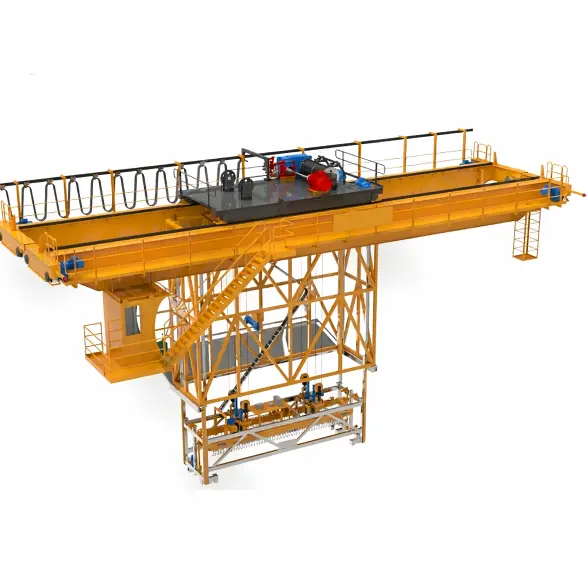
The Problem: A General-Purpose Crane in a Live-Cell Workshop
Chile's Copper Capital — and a Workshop at Its Limit
Chile produces more copper than any other country on earth. The Antofagasta region alone is home to several of the world's largest copper smelting and electrolytic refining facilities. When a refinery in the region launched an expansion in mid-2022 — targeting an increase in annual cathode copper output from 300,000 to 450,000 tonnes — the bottleneck wasn't the electrolytic cells. It was the equipment handling the plates above them.
The Old Setup: A General-Purpose Crane That Couldn't Keep Up
The refinery had been running a general-purpose overhead crane supplemented by forklifts to move anode and cathode plates around the electrolysis workshop. That setup had two serious problems.
Problem One: No Power, No Lift
The first was electrical. A standard overhead crane carries no insulation protection. When the electrolytic cells are energised, both the cell bodies and the plates inside them are live. The old crane could not operate above live cells — the power had to be cut before any lift could be made. Cutting power to handle plates, then restoring it to resume electrolysis, repeated across hundreds of cells, killed throughput.
Problem Two: Forklifts in a Workshop That Had No Room for Them
The second was congestion. Forklifts moving constantly across a dense workshop floor created bottlenecks and safety risks that worsened as the cell count grew.
The Decision: A Purpose-Built Crane for a Live-Cell Environment
After the expansion, the number of cells increased by nearly half and the plate-handling frequency more than doubled. The old approach wasn't viable at the new scale. The refinery decided to invest in a purpose-built electrolytic copper overhead crane that could operate directly above live cells and integrate with the plant's automated production scheduling system.
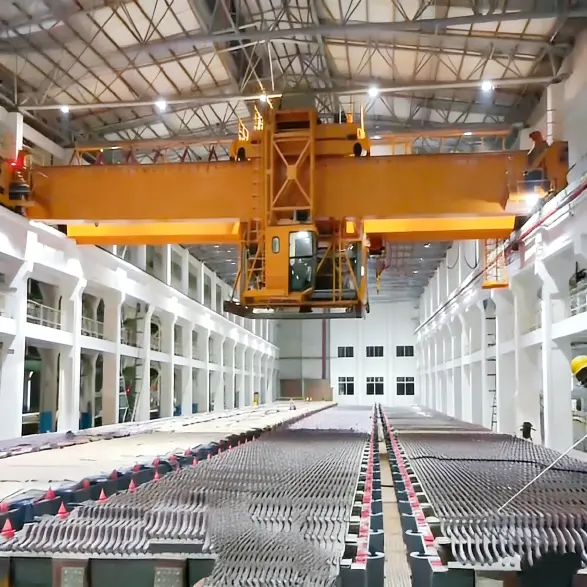
Why the Client Chose Yuntian
Several well-known metallurgical crane manufacturers submitted proposals. Three factors led to Yuntian being selected.
Complete Anti-Corrosion and Insulation Package
The acid mist environment inside a copper electrolysis workshop is one of the most corrosive industrial atmospheres in heavy manufacturing. The client had seen conventional crane coatings rust and peel within a year on previous equipment. Yuntian's proposal included a purpose-designed anti-corrosion and insulation system, not a modified standard crane.
PLC Automation Compatible with Existing Systems
The refinery's expansion included a central production scheduling system. The client needed a crane that could interface with that system directly — not one that required a separate control layer or constant manual operation. Yuntian's PLC-based fully automatic control system was designed for this kind of integration from the start.
Competitive Lead Time and Price
Against European alternatives, Yuntian's total crane price and delivery schedule were both more competitive — while the technical specification matched what the European suppliers were offering.
Three Engineering Challenges
1. Anti-Corrosion in an Acid Mist Environment
Copper sulphate electrolyte evaporates continuously inside an operating electrolysis workshop, producing acid mist that settles on structural steel, electrical cabinets, and exposed components. Standard industrial coatings don't last in this environment.
For this project, all structural steel — the main girder, trolley frame, and fabricated parts — was shot-blasted to Sa2.5 grade before any coating was applied. The coating system used an epoxy zinc-rich primer followed by an acid-resistant topcoat, with a total dry film thickness exceeding 200 microns. All electrical cabinets and junction boxes were manufactured from stainless steel with IP55 protection ratings.
By the end of 2023, after more than a year of continuous operation in the Antofagasta workshop, the main girder and electrical components showed no significant corrosion or coating failure.
2. Multi-Layer Insulation Between Hook and Live Cells
The insulation system is the most critical element in an electrolytic copper crane. When cells are energised, the cell bodies and plates are electrically live. Without reliable insulation between the crane's hook assembly and the wire rope, arcing can damage the equipment — or injure personnel.
Yuntian's design incorporates multiple insulation layers at the hook assembly: insulating plates, insulating sleeves, and insulating pads working together rather than relying on a single layer. Insulation resistance was verified to exceed 1 megohm in accordance with national standards, and every crane undergoes insulation testing before it leaves the factory.
In more than a year of operation at the Antofagasta refinery, the insulation system recorded zero faults.
3. ±5mm Positioning Accuracy Across 600+ Cells
The expanded electrolysis workshop houses over 600 cells arranged at high density. Plate loading and unloading requires positioning accuracy within ±5 millimetres. If a plate contacts the cell wall during placement, the result is either a short circuit or mechanical damage to the cell — neither of which is acceptable in continuous production.
Yuntian's electrical engineers installed a laser positioning system with absolute encoders, integrated with the PLC programme, to achieve fully automatic precision positioning across the full span of the workshop. The operator issues a command from the central control room. The crane travels automatically to the designated cell position and completes the grip or placement of the plate without manual guidance.
Delivery Timeline
| Milestone | Date |
|---|---|
| Manufacturing start | Early 2023 |
| Factory load tests completed | Late May 2023 |
| Shipped from Shanghai | Early June 2023 |
| Arrived Port of Antofagasta | Mid-July 2023 |
| Installation and commissioning completed | August 2023 |
| Entered formal production | Early September 2023 |
Results: Three Months After Commissioning
The refinery provided feedback in late 2023, covering three areas.
Throughput.
With the old general-purpose crane and forklift combination, the workshop handled around 400 cells per day. With the new electrolytic copper crane, stable daily throughput exceeded 600 cells — an increase of roughly 50%.
Labour.
The previous setup required two crane operators and a forklift driver working in coordination per shift. Now a single operator monitors the process from the central control room.
Durability.
After more than a year of continuous service, no significant corrosion, coating failure, or insulation fault had been recorded.
Based on these results, the refinery placed a repeat order with Yuntian in 2024 for an identical electrolytic copper crane to equip a second production line in the same workshop.
Specifications
| Parameter | Specification |
|---|---|
| Lifting capacity | 16 tonnes |
| Span | 28.5 metres |
| Lifting height | 15 metres |
| Work duty | A7 |
| Control | PLC fully automatic, central control room operation |
| Positioning accuracy | ±5 mm |
| Positioning system | Laser + absolute encoders |
| Anti-corrosion standard | Sa2.5 blast, epoxy zinc-rich primer + acid-resistant topcoat, DFT >200 µm |
| Electrical enclosures | Stainless steel, IP55 |
| Insulation resistance | >1 MΩ (verified per national standard) |
| Application environment | High-humidity, acid mist, live electrolytic cell workshop |
FAQ
Can an electrolytic copper crane operate above live electrolytic cells?
Yes — provided the crane is equipped with a properly designed and tested insulation system. A standard overhead crane cannot operate above live cells safely. The insulation system on this crane was verified to exceed 1 megohm resistance before shipment and has not recorded a fault in over a year of operation.
What anti-corrosion specification is appropriate for a copper electrolysis workshop?
The acid mist generated by copper sulphate electrolyte is significantly more aggressive than a standard industrial atmosphere. A minimum of Sa2.5 surface preparation, epoxy zinc-rich primer, and an acid-resistant topcoat with total dry film thickness above 200 microns is the baseline. Electrical enclosures should be stainless steel at IP55 or above. Standard industrial coatings rated for C3 environments typically show failure within 12 months in this application.
What automation level is available?
The crane in this project operates fully automatically: the operator issues a cell number from the central control room, and the crane handles travel, positioning, and plate gripping or placement without further input. Semi-automatic options are also available for plants where central scheduling integration is not yet in place.
What positioning accuracy can be achieved?
This project required ±5 mm, which was achieved using a laser positioning system combined with absolute encoders integrated into the PLC programme. This level of accuracy is achievable across the full working span of the crane.
If you're specifying an electrolytic copper overhead crane for a refinery expansion or new electrolysis workshop, send us your cell layout, span, and production targets. We'll confirm the insulation specification and automation configuration that fits your operation.
HENAN YUNTIAN CRANE CO., LTD.
Learn more about our company on the About Us page.
Email: sales@sgycranes.com
Website: [https://yuntiancrane.com]
Whatsapp:+86-17337353108


