


MARINE HATCH COVER GANTRY CRANE FOR A GREEK ULTRAMAX BULK CARRIER: ANTI-SWAY, CORROSION PROTECTION
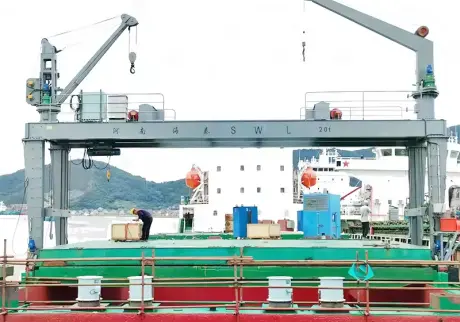
A Greek shipping company was spending over €150,000 a year renting port cranes just to open and close hatch covers. That figure didn't include demurrage. It didn't include the scheduling delays that came with waiting for a quayside crane to become available. It was purely the rental cost for a routine operation that happened at every port call.
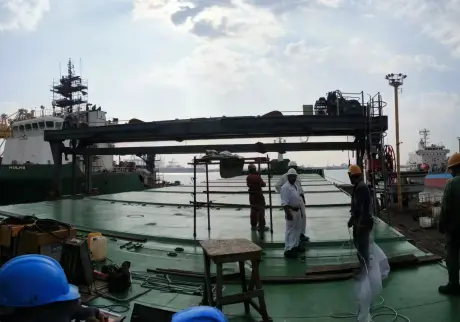
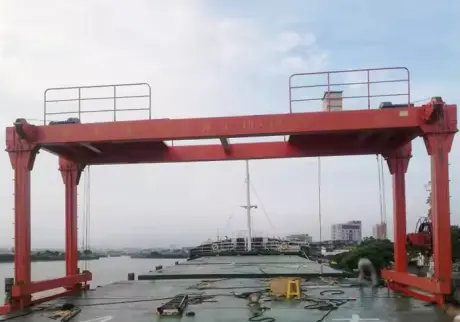
The solution was a purpose-built marine hatch cover gantry crane installed aboard the vessel. This case covers how the project was specified, what technical problems had to be solved, and what changed after commissioning.
Project Overview
| Parameter | Detail |
|---|---|
| Client | Greek Shipping Company |
| Vessel Type | Ultramax Bulk Carrier, 64,000 DWT |
| Flag / Home Port | Piraeus, Greece |
| Product | Marine Hatch Cover Gantry Crane |
| Safe Working Load | 35 tonnes |
| Span | 12 metres |
| Lifting Height | 5 metres |
| Trade Routes | Mediterranean, Red Sea, Indian Ocean |
| Cargo Types | Iron ore, coal, grain |
| Delivered | August 2022 |
| Installation | Concurrent with scheduled drydock |
Background: The Cost of Not Having an Onboard Crane
A Vessel Built for Routes Where Port Crane Availability Is Unreliable
Greece is the world's largest shipowning nation by tonnage. Open-hatch bulk carriers transport a wide range of cargo — metals, timber, grain, fertilizer — in multiple cargo holds, with hatch covers opened and closed by means of gantry cranes. This Ultramax vessel operated across Mediterranean, Red Sea, and Indian Ocean routes — a mix of modern container terminals and smaller regional ports where quayside crane availability is neither guaranteed nor cheap.
€150,000 a Year in Crane Rental — Before Demurrage
At every port call, the hatch covers had to be opened before cargo operations could begin and closed before departure. Without an onboard crane, that meant either waiting for a quayside crane to become available or paying for a mobile crane to come alongside. The shipowner calculated that crane rental alone cost more than €150,000 per year across the vessel's port rotation. That figure excluded demurrage — the daily penalty cost for vessel delays — which added further exposure every time a crane wasn't immediately available.
The Decision to Retrofit a Dedicated Hatch Cover Crane
The retrofit decision was timed to coincide with the vessel's scheduled drydock in late 2022. Installing the hatch cover gantry crane during drydock meant no additional off-hire time and allowed the crane rails and deck fittings to be integrated into the structural work already planned.
Why the Shipowner Chose Yuntian
Three Suppliers, One Clear Differentiator
The shipowner evaluated proposals from a European manufacturer, a Korean supplier, and Yuntian. Price was a factor — Yuntian's quotation came in approximately 35% below the European alternative — but price alone didn't drive the decision. Two technical factors were more important.
Corrosion Specification That Matched the Aegean Environment
1.Steel pontoon hatch covers require gantry cranes to lift and stow them, and maintaining weathertight sealing is critical to cargo protection. The shipowner's superintendent brought a corroded steel plate from one of the company's other vessels to the factory inspection — a direct demonstration of what the Aegean summer environment does to under-specified protective coatings.
2.Yuntian's proposal specified ISO 12944 C5-M offshore corrosion protection as standard: Sa2.5 blast preparation, epoxy zinc-rich primer, epoxy micaceous iron oxide intermediate coat, and polyurethane finish coat, with total dry film thickness not below 250 microns. Hydraulic lines throughout were 316L stainless steel with stainless steel compression fittings. The shipowner's superintendent reviewed the specification at the factory and accepted it before the order was placed.
Delivery Timing That Aligned with the Drydock Window
The European supplier's lead time would have required the vessel to wait. Yuntian's production and shipping schedule fit within the drydock window, allowing concurrent installation without additional off-hire days.
Two Technical Challenges
Challenge 1: Hatch Cover Tilt During Lifting
The Problem: A 35-Tonne Panel with an Off-Centre Centre of Gravity
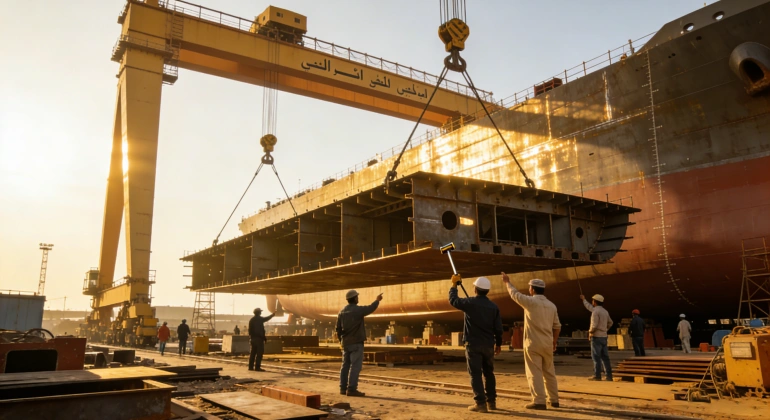
1.Lift-away hatch covers are usually multi-panel units designed so that there are several panels for each hatch opening, and they can be opened in an independent order to allow partial hatch opening. The Ultramax vessel's hatch covers weighed approximately 35 tonnes each, with a length-to-width ratio close to 2:1. The centre of gravity did not sit at the geometric centre of the panel.
2.When lifted by a conventional dual-hoist system without load balancing, this offset causes the panel to tilt — sometimes significantly — during the lift. A tilted panel in the air cannot be aligned with the hatch coaming rails cleanly, and if the tilt exceeds a few degrees, the panel edge risks contacting the coaming or hold structure during lowering.
The Solution: FEA-Based Load Balancing and Electronic Anti-Sway
1.Yuntian's engineers used finite element analysis to calculate the actual centre of gravity position for each hatch cover panel before designing the control system. A load-balancing module was integrated into the dual-hoist PLC programme to automatically adjust the wire rope tension on each side during the lift, compensating for the offset in real time.
2.An electronic anti-sway system was added alongside the load-balancing function. The two systems work together: the load-balancing module maintains panel attitude (within 1 degree of horizontal throughout the lift), while the anti-sway system dampens pendulum motion during travel. The result is a controlled lift and placement that doesn't require the deck crew to manually guide the panel or correct its orientation during the operation.
Challenge 2: Corrosion Protection for Aegean Summer Conditions
The Problem: Salt Spray Concentration Higher Than Standard Marine Specifications
The Aegean Sea has elevated salt spray concentration relative to open-ocean environments, particularly in summer. The shipowner's experience with previous vessels had shown that coatings specified to standard marine categories — C4 or below — degraded visibly within two years in this environment. The superintendent's corroded steel plate demonstration made the point directly.
The Solution: C5-M Specification with Full Stainless Steel Hydraulic Circuit
1.The protective coating system applied to this crane:
Surface preparation: Shot blast to Sa2.5 (Swedish Standard SIS 05 59 00)
Primer: Epoxy zinc-rich primer
Intermediate coat: Epoxy micaceous iron oxide (MIO)
Finish coat: Polyurethane topcoat
Total dry film thickness: ≥ 250 microns
-
Corrosion category: ISO 12944 C5-M offshore
2.All hydraulic lines were manufactured from 316L stainless steel. Hydraulic fittings used stainless steel compression joints throughout — not threaded carbon steel fittings, which corrode at the thread interface in high-salt environments. Electrical enclosures were rated to IP56.
3.The shipowner's superintendent inspected the completed crane at the factory before shipment. The coating application records, film thickness measurements, and hydraulic circuit documentation were reviewed and accepted.
Delivery and Installation Timeline
| Milestone | Date |
|---|---|
| Factory acceptance test completed | July 2022 |
| Shipped from Shanghai | August 2022 |
| Arrived at drydock facility | August 2022 |
| Installation on vessel | August 2022 (concurrent with drydock) |
| Commissioning completed | August 2022 |
| Entered commercial service | September 2022 |
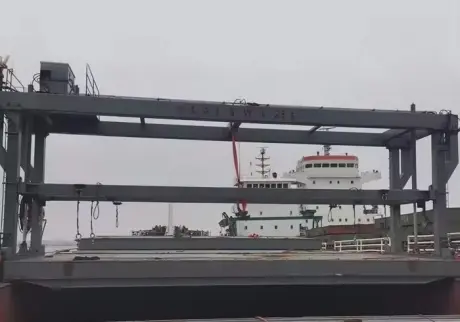
The crane shipped from Shanghai and arrived at the drydock facility within the planned window. Installation and commissioning were completed before the vessel undocked, with no additional off-hire days required.
Results
Hatch Operation Time Cut from 2 Hours to 40 Minutes
1.Before the crane was installed, opening a single hatch required coordinating with port crane operators, waiting for crane availability, and then supervising the lift — a process that averaged around two hours per hatch. With the onboard hatch cover gantry crane, the vessel's own crew handles the operation. Single-hatch open or close time dropped to approximately 40 minutes.
Across the vessel's port rotation — multiple hatches, multiple ports, multiple voyages per year — the cumulative time saving is significant. Port call efficiency improved. Demurrage exposure on hatch-related delays was eliminated.
No Hydraulic Leaks or Control System Faults in the First Year
After six months in service across Mediterranean summer and Red Sea high-temperature conditions, the shipowner reported no hydraulic line leaks and no control system faults. The anti-sway and load-balancing systems performed as specified — the deck crew noted that hatch cover placement had become a routine operation rather than a supervised precision lift requiring multiple people to guide the panel.
Zero Corrosion at the One-Year Survey
At the vessel's routine drydock inspection one year after commissioning, the crane's structural steel was examined. No visible corrosion or coating delamination was recorded. The hydraulic lines and fittings showed no surface oxidation.
Two Follow-On Orders for Kamsarmax Vessels
Based on the Ultramax installation's performance, the same Greek shipping company ordered two additional marine hatch cover gantry cranes from Yuntian in 2023, for installation on two Kamsarmax bulk carriers in their fleet. Both were specified to the same C5-M corrosion standard and dual-hoist load-balancing configuration.
Key Specifications
| Parameter | Specification |
|---|---|
| Safe working load | 35 tonnes |
| Span | 12 metres |
| Lifting height | 5 metres |
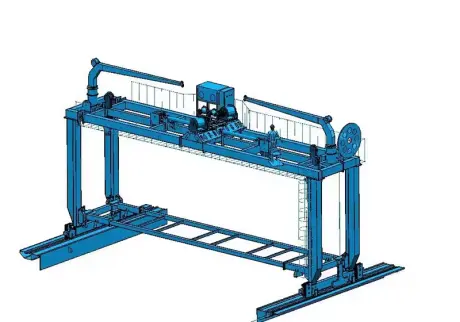
| Hoist configuration | Dual hoist, 4-hook lifting (one hoist operates two hooks via pulley assembly) |
| Load balancing | PLC-integrated automatic load balancing, panel tilt ≤ 1° |
| Anti-sway system | Electronic anti-sway |
| Drive system | Electro-hydraulic |
| Hydraulic lines | 316L stainless steel throughout |
| Hydraulic fittings | Stainless steel compression type |
| Surface preparation | Sa2.5 blast |
| Coating system | Epoxy zinc-rich primer + epoxy MIO + polyurethane finish |
| Total DFT | ≥ 250 microns |
| Corrosion category | ISO 12944 C5-M offshore |
| Electrical enclosures | IP56 |
| Applicable vessel types | Ultramax, Kamsarmax, Handymax bulk carriers |
| Classification | CCS (available: BV, DNV, ABS on request) |
FAQ
Why does a marine hatch cover gantry crane need a load-balancing system?
Bulk carrier hatch covers are large steel panels — typically 30 to 50 tonnes — with a centre of gravity that rarely sits at the geometric centre of the panel. Without active load balancing, a dual-hoist system lifts the panel unevenly, causing tilt. Even a few degrees of tilt during a lift creates alignment problems when lowering the panel back onto the hatch coaming rails, and risks the panel edge contacting the coaming or cargo hold structure. A PLC-integrated load-balancing module adjusts wire rope tension on each hoist in real time, keeping the panel horizontal throughout the lift and placement.
What corrosion protection standard is appropriate for a bulk carrier operating in the Mediterranean and Red Sea?
The Mediterranean — and the Aegean in particular — has higher salt spray concentration than many open-ocean environments. Standard C4 marine coating systems show visible degradation within two to three years in sustained Aegean operating conditions. ISO 12944 C5-M offshore category is the appropriate specification: Sa2.5 blast preparation, multi-coat epoxy system with a polyurethane finish, and total dry film thickness of at least 250 microns. All hydraulic lines should be stainless steel — carbon steel hydraulic lines corrode at fittings and thread interfaces in these conditions.
What vessel types is this crane suitable for?
Marine hatch cover gantry cranes supply capacity from 5 tonnes to 80 tonnes for hatch cover movement, designed to IACS, CCS, and BV class standards. The crane in this project was designed for Ultramax bulk carriers and subsequently specified for Kamsarmax vessels. The configuration — span, lifting height, rail gauge, and hoist capacity — is customised to the vessel's hatch dimensions and cover weight. Handymax, Supramax, Ultramax, and Kamsarmax bulk carriers are the most common applications.
What is the typical payback period for a hatch cover crane retrofit?
This depends on the vessel's port rotation and prevailing port crane hire rates. For this Greek operator, crane rental alone exceeded €150,000 per year — not including demurrage on hatch-related delays. At that cost level, the payback period on the crane investment is measured in months rather than years. For vessels on routes where quayside crane availability is unreliable or expensive, the economics of an onboard hatch cover crane are straightforward.
What classification society certification is available?
The crane in this project was certified by CCS. BV, DNV, ABS, and LR certification is available on request, depending on the vessel's flag state and classification society requirements. Confirm the required certification before placing the order — class society inspection during manufacturing is part of the process, not a documentation step at the end.
If you're evaluating a marine hatch cover gantry crane for a bulk carrier retrofit or newbuild, send us the vessel type, hatch cover dimensions, and trade route. We'll confirm the load-balancing configuration and corrosion specification that fits your operation.
HENAN YUNTIAN CRANE CO., LTD.
Learn more about our company on the About Us page.
Email: sales@sgycranes.com
Website: [https://yuntiancrane.com]
Whatsapp:+86-17337353108


